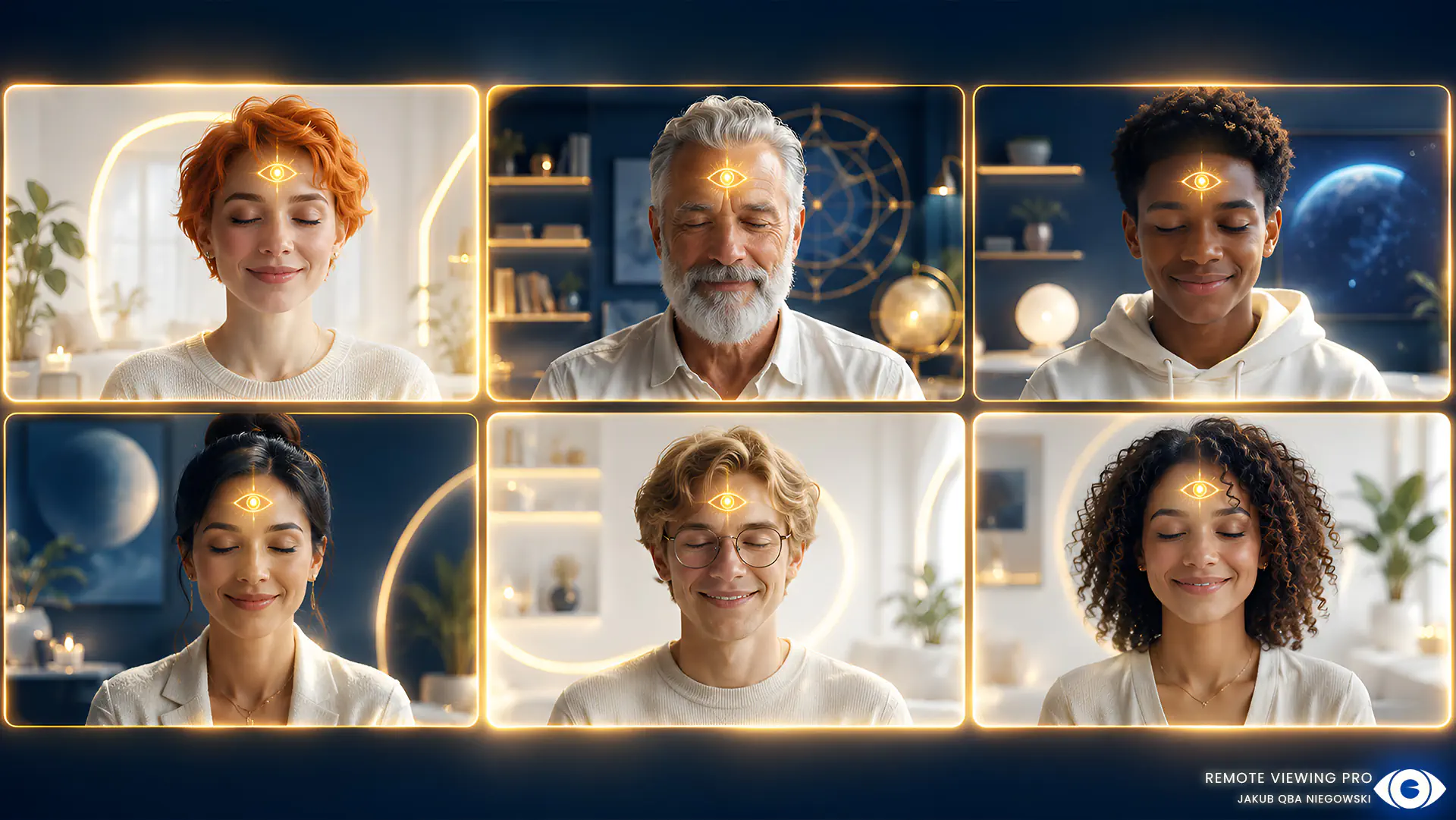

Some experiences leave you exactly as they found you. Others quietly rearrange the furniture of your mind, so that afterward the world looks subtly different and you can never quite go back to seeing it the old way. For a great many people, learning remote viewing is the second kind of experience. It does not just teach you a skill; it changes how you see reality itself. And that shift in perspective is one of the most transformative things the practice has to offer.
This is not about adopting new beliefs. It is about what happens to your view of the world when you have personally perceived something that should not have been possible. Let me walk you through how remote viewing reshapes the way you understand reality, and why that change runs so deep.
From doubt to direct experience
Most people approach remote viewing with a healthy dose of skepticism, and that is exactly as it should be. The idea that you can perceive distant or hidden things sounds, on its face, impossible. You can read every study and hear every story and still hold it at arm’s length, an interesting idea you do not quite believe. And then you do it yourself.
That is the pivotal moment, and nothing else compares to it. When you personally perceive a target you had no ordinary way of knowing, and then check it against reality and find you were right, the question stops being abstract. It is no longer something you believe or disbelieve; it is something you have done. This shift, from secondhand doubt to firsthand experience, is the hinge on which everything turns. You cannot un-know what you have directly experienced, and that single verified session quietly dismantles the certainty that such things are impossible.
A new relationship with time and space
Once you have perceived across distance, your intuitive sense of space loosens its grip. The everyday feeling that far away means inaccessible, that walls and miles are absolute barriers to knowing, no longer quite holds. You have experienced, directly, that awareness can reach past these boundaries, and that experience subtly rewires how you relate to the world around you.
For some practitioners, especially those who explore perceiving the past or future, the sense of time loosens too. The rigid feeling of past as gone and future as unknowable softens into something more fluid and mysterious. None of this means you stop functioning in ordinary space and time; you still catch trains and keep appointments. But underneath the practical surface, your deep assumptions about the nature of distance and time have shifted. You hold them more lightly, aware that they may be less absolute than they feel, and that quiet reorientation changes the texture of how you experience reality.
Everyday shifts viewers describe
The change in perspective shows up in small, concrete ways that practitioners love to compare. Many describe becoming more attentive to subtle impressions in daily life, more willing to trust a quiet inner sense they would once have ignored. Coincidences and intuitions take on a different quality when you have evidence that perception runs deeper than you assumed.
People also report a general softening of rigid certainty, a new openness to mystery and possibility. Having personally encountered something that defies the conventional account of reality, they hold the rest of their assumptions a little more loosely too, becoming more curious and less quick to dismiss. At the same time, the discipline of feedback keeps them from sliding into credulity, so the openness stays balanced with healthy skepticism. The result is a mind that is both more open and more grounded, more alive to wonder yet still committed to checking what is real. That combination is rare and genuinely valuable.
Wonder without losing your footing
It would be easy to assume that having your view of reality shaken would be destabilising, and approached carelessly it could be. But remote viewing, done well, expands your perspective while keeping you grounded, because it is built on constant reality-testing. You are not asked to believe wild claims; you are invited to perceive and then verify. The wonder you develop is earned and checkable, not swallowed whole.
This is what makes the shift healthy rather than unmooring. You come to hold a larger, more mysterious view of reality, while remaining firmly anchored in evidence and ordinary life. The practice teaches you to be amazed and rigorous at the same time, to let your sense of the possible expand without abandoning your judgement. That balance protects you, turning what could be a disorienting experience into a stable, enriching expansion of how you see the world. Wonder and groundedness, held together, are the signature of a healthy practitioner.
Why the new perspective endures
What makes this shift in perspective so powerful is that it does not fade like a passing inspiration. Because it rests on direct, verified experience rather than belief, it stays with you. You can forget a fact you read or lose enthusiasm for an idea you were told, but you cannot easily erase the memory of perceiving something real that you could not have known. That experiential bedrock makes the change durable.
Years after a pivotal session, practitioners still carry the quiet knowledge that reality is wider and stranger than the standard account allows. It becomes part of how they see everything, a permanent loosening of the assumption that the ordinary surface of things is all there is. This enduring quality is exactly why so many describe remote viewing as genuinely life-changing. It is not a temporary thrill but a lasting reorientation, rooted in something you proved to yourself.
Stepping into your wider potential
At its heart, this changed perspective is an invitation. If your perception reaches further than you believed, if reality is more open and connected than you were taught, then you yourself are more than you assumed. The shift in how you see the world is inseparable from a shift in how you see your own potential. The walls you thought hemmed you in turn out to be more like doorways.
Practitioners often describe feeling less limited, more capable, more aware of possibilities they had never considered. This is not arrogance; it is an expanded, grounded sense of what a human being might be. Stepping into that wider potential is perhaps the deepest gift of the whole practice. Remote viewing does not just change how you see reality out there. It changes how you see yourself, and that changed self-understanding can open doors throughout your life.
Where this shift fits in the bigger picture
The way remote viewing changes your perspective is central to its power as a path of personal growth, deeply connected to how the practice awakens your perception and intuition. To explore that connection further, it is worth reading about how remote viewing sharpens your intuition.
And if you are curious to experience this shift for yourself, the change comes not from reading about it but from doing it. Our live online remote viewing training guides you to that pivotal firsthand experience, the verified session that quietly changes how you see reality from the inside out.
Holding the new view with humility
One more thing matters about this changed perspective: the spirit in which you hold it. The healthiest practitioners wear their expanded view of reality lightly, with humility rather than certainty. They do not become evangelists convinced they have figured out the universe. They simply hold a quiet, open sense that reality is wider and stranger than the standard account, while admitting how much remains genuinely unknown.
This humility keeps the shift grounded and graceful. It is tempting, after a few striking experiences, to swing from old certainty to a new and equally rigid one. The wiser path holds the wonder loosely, staying curious rather than dogmatic. You have glimpsed that reality is more open than you thought, and that very openness should make you humbler about claiming to have it all worked out. That balance, expanded yet humble, is the mark of someone the practice has changed in a healthy way.
Frequently asked questions
How does remote viewing change how you see reality?
By giving you a direct, verified experience of perceiving beyond the ordinary senses, it shifts your view of reality from secondhand doubt to firsthand knowledge. Your deep assumptions about distance, time, and possibility loosen in a lasting way.
Is having your view of reality changed unsettling?
Done well, it is expansive rather than destabilising, because remote viewing is built on constant reality-testing. You develop a larger, more mysterious view of the world while staying grounded in evidence and ordinary life.
Why does the shift in perspective last?
Because it rests on direct, verified experience rather than belief. You cannot easily erase the memory of perceiving something real you could not have known, so the changed perspective endures for years and becomes part of how you see everything.
Does this change how I see myself?
Yes. If your perception reaches further than you believed, then you are more capable than you assumed. The shift in how you see reality is inseparable from an expanded, grounded sense of your own potential, which can open doors throughout life.
Jakub Qba Niegowski – Extrasensory Consciousness Development Specialist