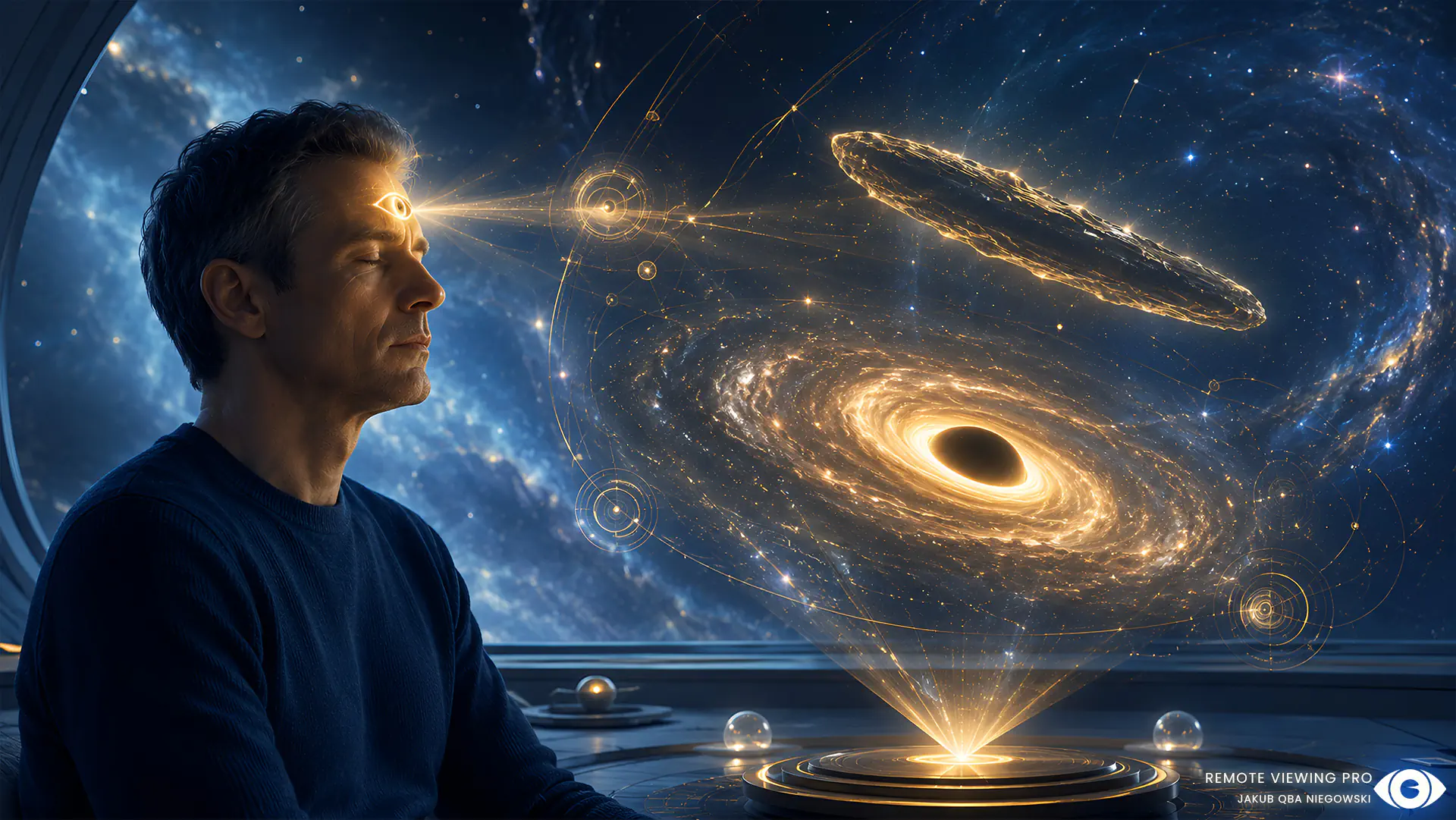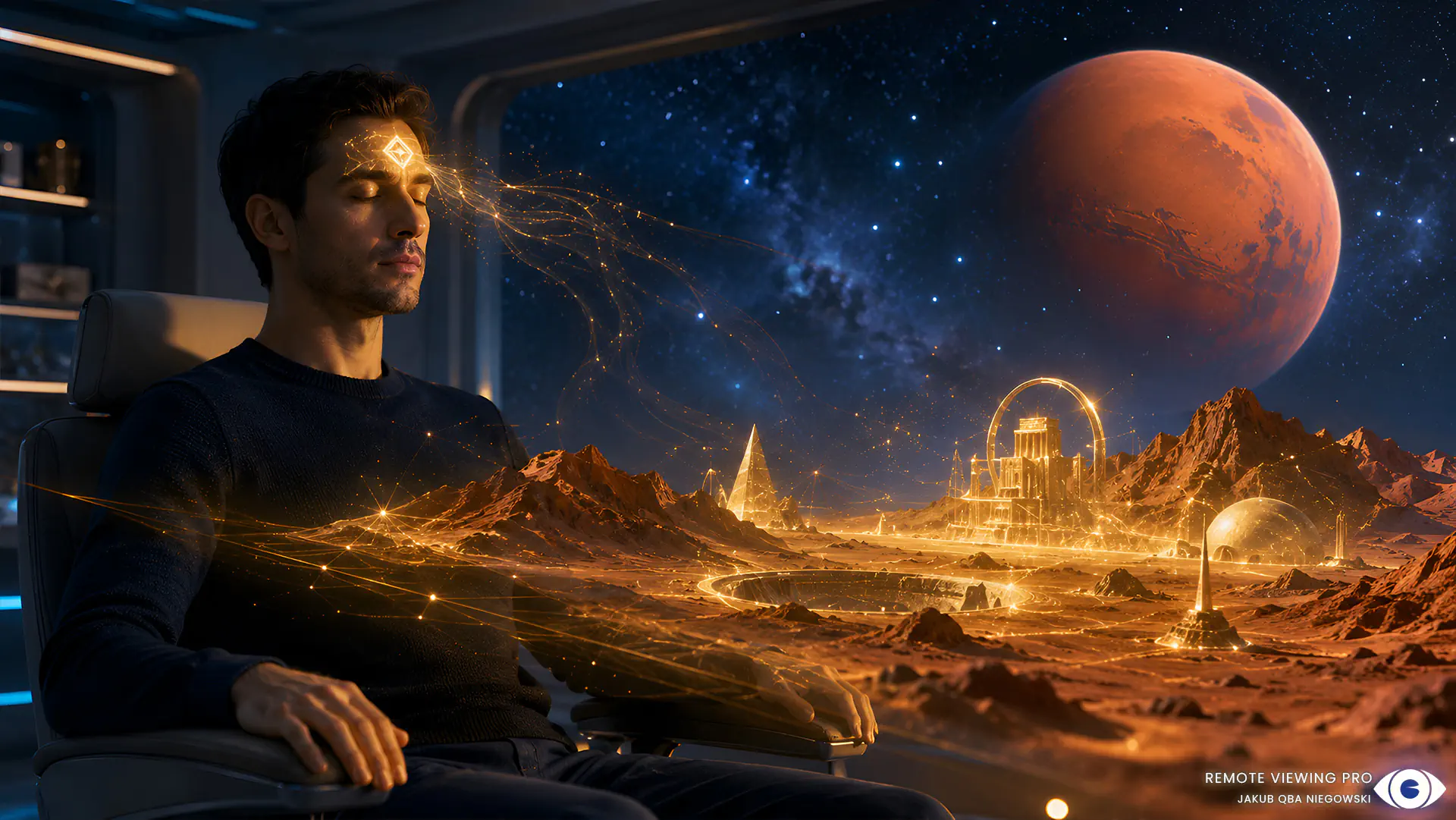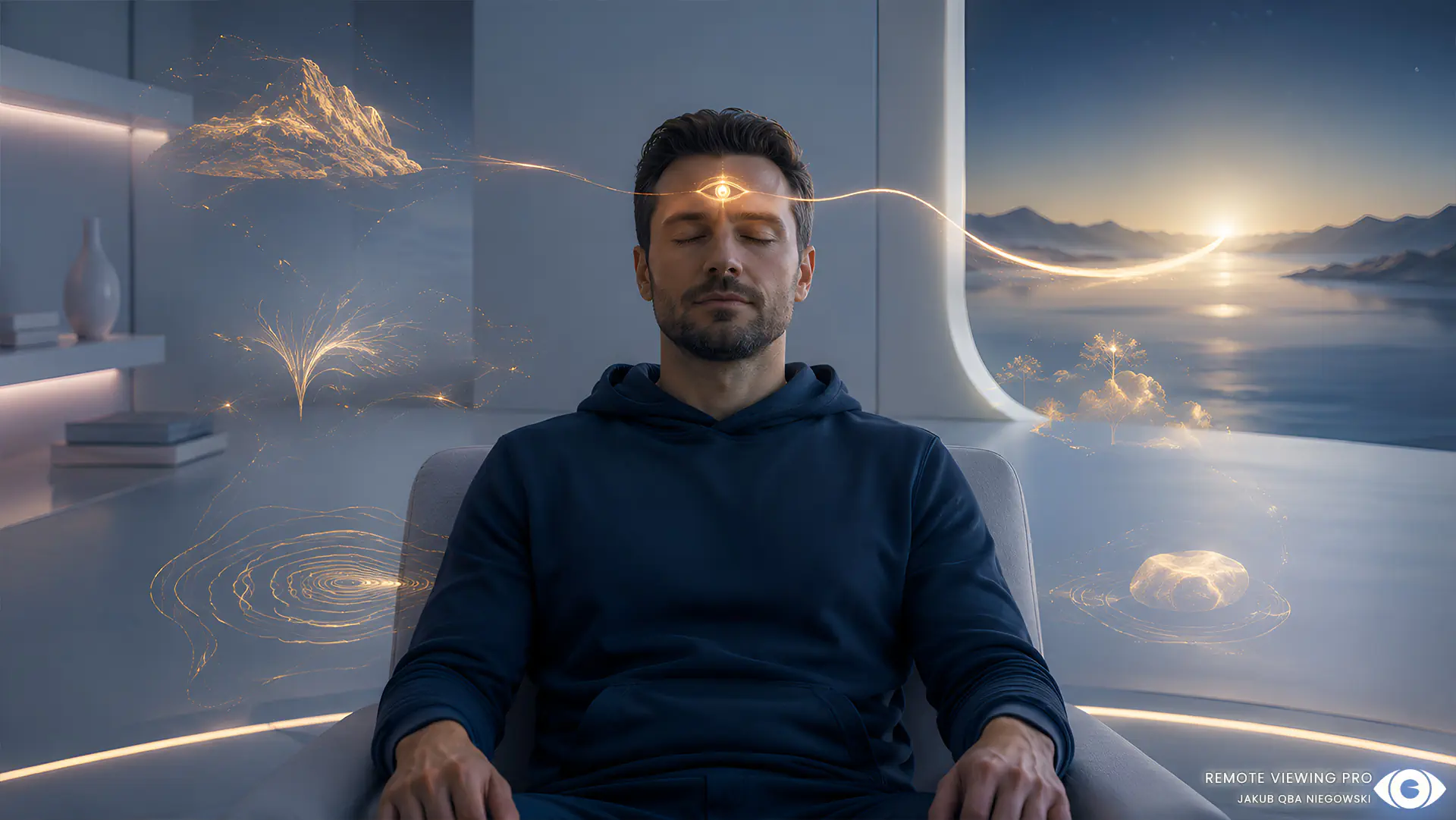

Millions of people meditate. They sit, they breathe, they quiet the mind, and they reap real benefits in calm and clarity. Far fewer realise that the very stillness they are cultivating is also the doorway to one of the most fascinating skills a human being can develop. Remote viewing and meditation are natural partners, two practices that share a common foundation and reinforce each other beautifully. If you already meditate, you are closer to remote viewing than you think. And if you want to remote view, meditation is one of the surest paths in.
Let me explore why these two practices belong together, and how each one strengthens the other in a way that benefits everything you do.
Why a quiet mind is the gateway
The central challenge of remote viewing is hearing a faint signal beneath the constant roar of mental chatter. The genuine impression is quiet; the thinking mind is loud. Everything in the practice depends on quieting that inner noise enough to perceive what is subtle and true. And quieting the mind is, of course, exactly what meditation trains.
This is why a quiet mind is the gateway to perception. The stillness a meditator cultivates is the same stillness a remote viewer needs to receive clean impressions. When the surface of the mind settles, the deeper signals can rise and be noticed. Meditation builds precisely this capacity, the ability to let thoughts settle and rest in a calm, alert awareness. In that sense, every meditation session is also a kind of preparation for perception, developing the inner quiet that remote viewing requires to function at all.
How the two practices reinforce each other
The relationship runs in both directions, which is what makes it so rich. Meditation supports remote viewing by building the stillness and focus that perception depends on. A regular meditator usually finds it easier to drop into the receptive state a session requires, because they have already trained their mind to settle on command. The groundwork is laid.
But remote viewing also gives back to meditation. It provides a concrete, engaging purpose for the stillness, a fascinating application that can deepen your motivation to sit. Where meditation is sometimes criticised for feeling aimless, remote viewing offers a vivid demonstration of what a trained, quiet mind can actually do. Many people find that adding remote viewing to their practice reinvigorates their meditation, giving the stillness a thrilling new dimension. The two practices feed each other, each making the other richer and more rewarding.
Building the focus perception needs
Beyond stillness, remote viewing requires focus, the ability to hold your attention steadily on a target without straining or drifting. This too is a capacity that meditation directly develops. Concentration practices, where you rest your attention on the breath or another anchor, train the exact mental muscle that perception relies on. The wandering mind is gently, repeatedly brought back, and over time it learns to stay.
This trained focus is invaluable in a session. Perception requires you to keep a soft, sustained attention on the target while remaining relaxed and open, a delicate balance that meditation prepares you for perfectly. The meditator’s practised ability to notice when attention has wandered and to return it without frustration is exactly what a viewer needs. In this way, the focus you build on the cushion becomes the focus you bring to perception, and the two skills grow together as one.
Calm as a superpower
There is a deeper gift hidden in this partnership, and it reaches far beyond remote viewing. The calm that both practices cultivate is, in the conditions of modern life, something close to a superpower. We live in a world engineered to fragment our attention and keep us agitated, scattered across endless notifications and demands. The ability to settle into deep, focused stillness at will is increasingly rare and increasingly precious.
Remote viewing and meditation together build exactly this capacity, a reservoir of calm and concentration you can draw on anywhere. This steadiness serves you in every area of life: in stress, in difficult conversations, in moments that demand a clear head. The stillness you develop for perception becomes a stable centre you carry with you. So even apart from the wonder of viewing distant targets, this pairing gives you something quietly powerful, the trained ability to be calm and focused in a world that constantly pulls the other way.
A gentle on-ramp for meditators
If you already have a meditation practice, you possess a real head start, and it is worth recognising that. The hardest part of remote viewing for most beginners is achieving the quiet, focused state in the first place, and you have already been training exactly that. The capacity you have built sitting in stillness transfers directly, giving you a smoother entry into perception than someone starting cold.
This makes remote viewing a natural next step for meditators looking to deepen or extend their practice. You are not starting from scratch; you are pointing a well-developed capacity for stillness in a new and fascinating direction. Many meditators find this thrilling, a way to discover what else their trained mind can do. The threshold is lower than you might imagine, and the stillness you have already cultivated is the very foundation the new skill is built upon.
Beginning where stillness leads
Whether you come to this pairing as a meditator curious about perception or as someone drawn to remote viewing who needs to build stillness first, the path forward is the same: cultivate the quiet, focused mind, and let it carry you toward perception. The two practices weave together so naturally that developing one almost inevitably strengthens the other, and the combination is more powerful than either alone.
For anyone wanting to begin, the foundations of remote viewing build directly on the stillness that meditation cultivates. Our free remote viewing eBook introduces those foundations, showing how a quiet mind becomes the gateway to perception. If you already meditate, you may be surprised how ready you already are to step through that doorway.
Where this pairing fits in the bigger picture
The partnership of remote viewing and meditation is part of the wider way the practice cultivates awareness, focus, and inner growth. The stillness it builds underpins the sharpening of perception and intuition that the practice is known for. To explore that thread, it is worth reading about how remote viewing sharpens your intuition.
Two distinct practices, one shared root
It is worth being clear that remote viewing and meditation are not the same thing, even as they share a common foundation. Meditation, in most traditions, aims at letting go, resting in awareness without grasping at any particular goal or target. Remote viewing uses a similar stillness but then points it at something specific, seeking accurate, recordable information about a target. One opens the hand; the other, from that same openness, reaches.
Understanding this distinction actually enriches both. It means meditation can remain your practice of pure being, while remote viewing becomes a practice of focused perception that grows from the same root. You need not choose between them, and you need not confuse them. They are two branches from one trunk of inner stillness, each offering something the other does not, and together they form a fuller cultivation of the mind than either could alone.
Calm you can carry anywhere
The most portable gift of this pairing is the calm itself. The stillness you build for perception does not stay on the meditation cushion or in the viewing session. It becomes a steadiness you carry into traffic jams, hard conversations, sleepless nights, and moments of fear. The trained ability to settle your mind on command is endlessly useful, far beyond any specific practice.
This is why I encourage people to value the calm for its own sake, not merely as a means to perception. In a frantic world, a reliable inner stillness is one of the most practical assets a person can own. Remote viewing and meditation together build that asset deeply, giving you a centre of quiet you can return to anywhere, anytime. Whatever else these practices offer, that steady calm alone would make them worth pursuing.
Frequently asked questions
Are remote viewing and meditation related?
Closely. Both depend on a quiet, focused mind. Meditation cultivates the stillness and concentration that remote viewing requires to perceive subtle signals, making the two practices natural partners that reinforce each other.
Does meditation help with remote viewing?
Yes, considerably. Meditation builds the calm, settled state and steady focus that perception depends on, so meditators often find it easier to drop into the receptive state a session requires. It gives you a genuine head start.
Can remote viewing improve my meditation?
Many people find it does. Remote viewing gives the stillness a concrete, fascinating purpose, which can deepen motivation and reinvigorate a meditation practice that had started to feel aimless. The two feed each other.
Do I need to meditate before learning remote viewing?
It is not strictly required, but it helps. The quiet, focused mind that meditation trains is exactly what perception needs, so a meditation background smooths the way. If you do not meditate, learning remote viewing will build that stillness regardless.
Jakub Qba Niegowski – Extrasensory Consciousness Development Specialist