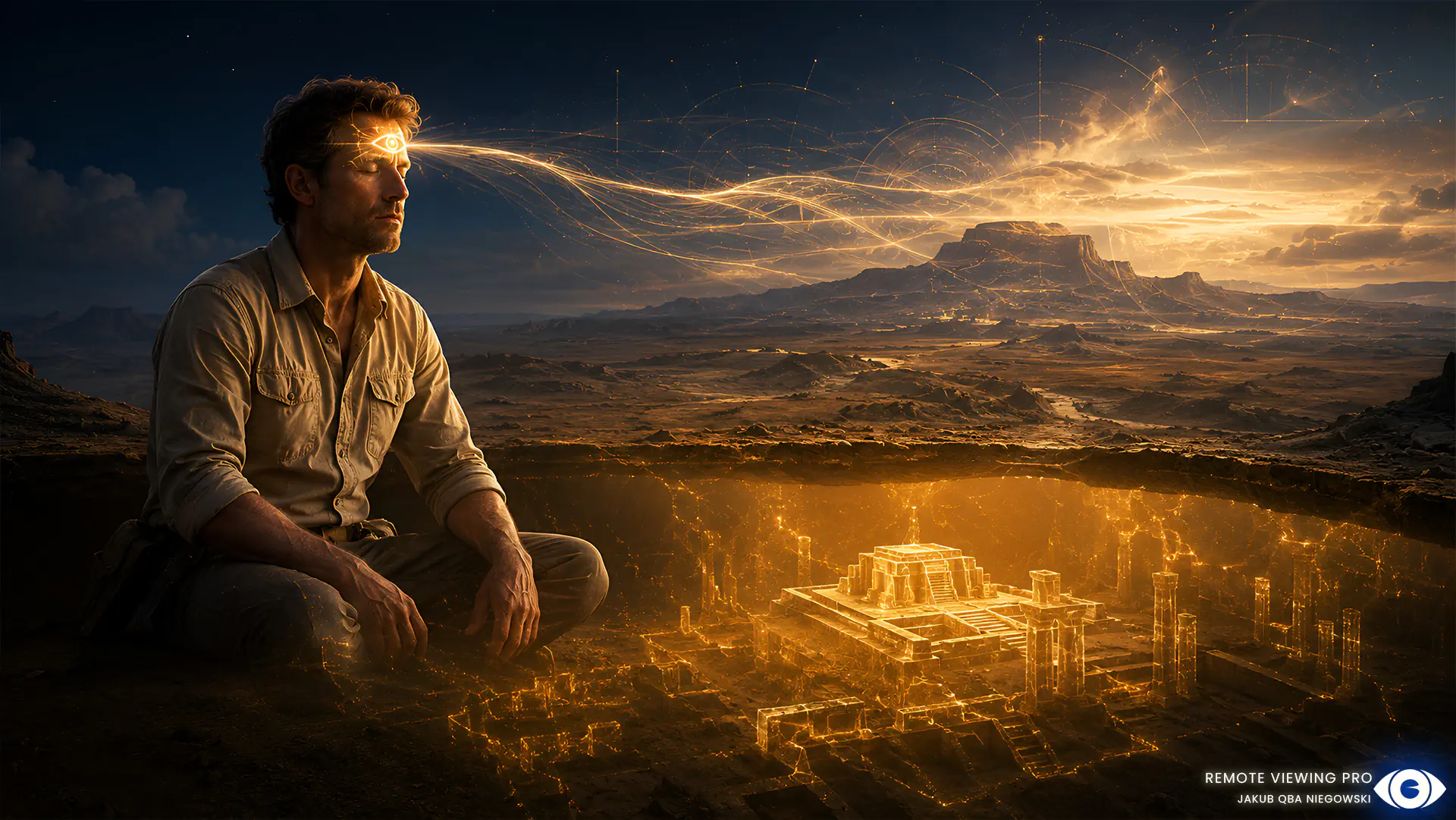
Some figures in the history of remote viewing feel almost too vivid to be real, and Pat Price is the clearest example. A former police officer turned psychic spy, he produced descriptions of secret Soviet facilities so specific, and so apparently accurate, that they still anchor arguments about whether remote viewing works at all. Decades later, his sessions remain among the most quoted in the entire field.
His story is worth knowing not because he was a mystic, but because he was so ordinary in every other respect. Price suggests that a striking talent for perception can hide inside the most unremarkable life, waiting for the right method to draw it out.
A police officer with an extraordinary talent
Before he ever sat in a laboratory, Pat Price worked in law enforcement, rising to a senior role in a California police department. By his own account, he had quietly used a strange knack throughout his career: when chasing suspects, he would picture a location in his mind and direct his officers there, often with uncanny success. He treated it as a private quirk rather than a gift, the sort of thing you do not mention at the station for fear of the reaction.
That mix of practicality and hidden ability made him a remarkable fit when he found his way to the remote viewing research at the Stanford Research Institute in the early 1970s. Here was a grounded, no-nonsense man with a lifetime of using perception as a working tool. He was not interested in mysticism. He wanted to know if the thing he had always quietly done could be aimed, tested, and trusted. The researchers soon discovered they had stumbled on one of the most naturally gifted viewers they would ever work with.
Describing a secret installation from a chair
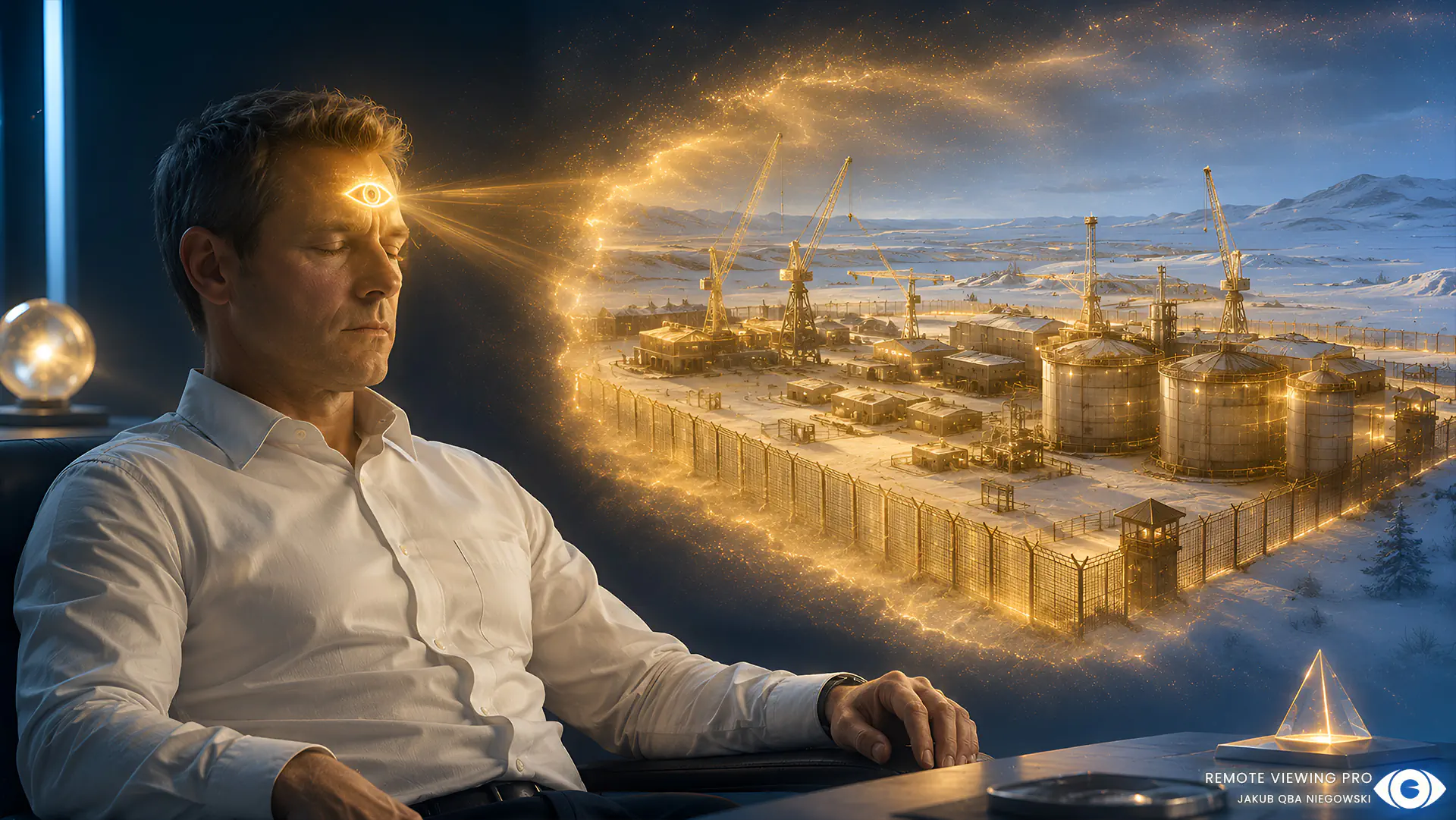
The case that made Price legendary unfolded in 1974. The CIA, testing whether remote viewing could reach targets beyond the read of any spy, handed the SRI team nothing but a set of map coordinates. They pointed to a remote and highly classified Soviet site, a research and development facility near Semipalatinsk in what is now Kazakhstan, deep inside hostile territory and invisible to ordinary intelligence.
Price was told only the coordinates. He had never been there, had no briefing, and no way of knowing what lay at that point on the map. Settling into the receptive state, he began to describe what he perceived: not a vague mood or a lucky label, but structural, specific detail about the installation and its surroundings. He was, in every meaningful sense, looking at a guarded state secret from a comfortable chair on the other side of the planet.
Cranes, silos and a perimeter, later confirmed
The detail that everyone remembers is the crane. Price described a huge gantry crane moving back and forth over a building, riding on rails set on either side, an oddly specific image to pull from a pair of coordinates. When his description was later checked against what intelligence eventually learned about the site, that giant rail-mounted crane proved to be a real and distinctive feature of the facility.
He went further, sketching buildings, structures, and elements of the layout, some of which matched and some of which did not. I think honesty serves Price better than legend here, so it is worth saying plainly: not every detail he reported held up, and sceptical analysts have pointed out the misses alongside the hits. But the central, hard-to-explain fact remains. Working from coordinates alone, with no conventional access, he produced verifiable specifics about one of the Soviet Union’s most secret installations. That is not the kind of thing a cold guess delivers.
The honest debate about his hits
Price’s sessions sit at the heart of the argument over remote viewing precisely because they are so dramatic. Supporters point to the crane and the confirmed structures as proof that perception reached where no spy could. Critics counter that some of his drawings included features the site did not have, and that selective retelling can make a mixed result look like a flawless one.
Both observations can be true at once, and the mature view holds them together. Real remote viewing is signal mixed with noise. A session that nails a giant crane and a perimeter while also including phantom details is exactly what you would expect from a genuine but imperfect human ability, not from either a fraud or an infallible oracle. Price’s record, taken whole, is far more persuasive as evidence of something real than as evidence of nothing – and pretending he was perfect does the truth no favours.
The legacy of one of remote viewing’s greatest viewers
Price’s story carries a shadow. In 1975, at the height of his involvement, he died suddenly of a heart attack, his contribution cut short while the work was still young. His early death only deepened his near-mythic status among those who study the field, and it left open the tantalising question of what more he might have demonstrated had he lived.
What he left behind is a benchmark. When practitioners talk about what a gifted, well-tasked viewer can achieve, Price is one of the names they reach for. His sessions helped convince serious people that remote viewing deserved sustained study, and they remain a touchstone for anyone trying to understand the heights the skill can reach. He set a bar that still defines excellence in the discipline.
Why the coordinate test mattered so much
It is worth pausing on just how demanding the URDF-3 task really was, because the conditions are what give it weight. Price was not shown a photograph, handed a description, or even told what kind of place he was looking for. He was given numbers on a map and nothing else. That design was deliberate. By stripping away every ordinary cue, the experimenters made it almost impossible for him to fake or infer the answer from context.
When a viewer working under those constraints produces a specific, verifiable detail like the rail-mounted crane, the usual explanations start to strain. There was no briefing to leak the answer, no body language to read, no prior knowledge to draw on. This is exactly why the coordinate cases became so central to the research: they closed the loopholes that critics rightly worry about, and what remained was harder to dismiss than any anecdote told after the fact.
The man behind the myth
For all the legend that grew around him, Price himself comes across in the records as refreshingly down to earth. He did not posture as a mystic or wrap his ability in spiritual theatre. He approached remote viewing the way a good detective approaches a case: gather the impressions, test them, and stay sceptical of your own conclusions. That grounded temperament is part of why the researchers trusted his data.
It is a useful corrective to the image many people carry of who can do this. Price was not a robed seer. He was a practical public servant who happened to perceive things others could not, and who was willing to have that ability put under a microscope. The most effective viewers, then and now, tend to share that same unglamorous seriousness.
What Price’s story can teach a beginner
It would be easy to read Price as a one-in-a-million natural and conclude the rest of us need not bother. I would push back on that. Yes, he had unusual raw ability. But his gift only became useful when it met a structured method that could aim and test it – the same method, in its descendant forms, that ordinary people learn today. His career is less an argument that you must be born special and more a glimpse of how far trained perception can travel.
The encouraging takeaway is that the quiet knack Price hid for years is more common than people assume; most of us simply never give it a structure or a chance. If his story makes you wonder what your own perception might do with proper guidance, our live online remote viewing training offers exactly that structured path. And to understand the wider effort Price’s sessions helped launch, it is worth reading about the CIA’s Project Stargate.
Frequently asked questions
Who was Pat Price?
Pat Price was a former California police officer who became one of the most gifted remote viewers in the early Stanford Research Institute work and the CIA-backed program. He is famous for describing secret Soviet sites from map coordinates alone.
What is Pat Price best known for?
His best-known session is the 1974 remote viewing of a classified Soviet research facility near Semipalatinsk, where he described a distinctive rail-mounted gantry crane and other structures later confirmed as real features of the site.
Were all of Pat Price’s descriptions accurate?
No, and honest accounts acknowledge this. Some details he reported did not match the site, while others, like the giant crane, were striking hits. The mix of accurate and inaccurate data is typical of genuine remote viewing.
How did Pat Price die?
Price died suddenly of a heart attack in 1975, while still actively involved in the research. His early death cut short a remarkable career and added to his legendary status in the field.
Jakub Qba Niegowski – Extrasensory Consciousness Development Specialist