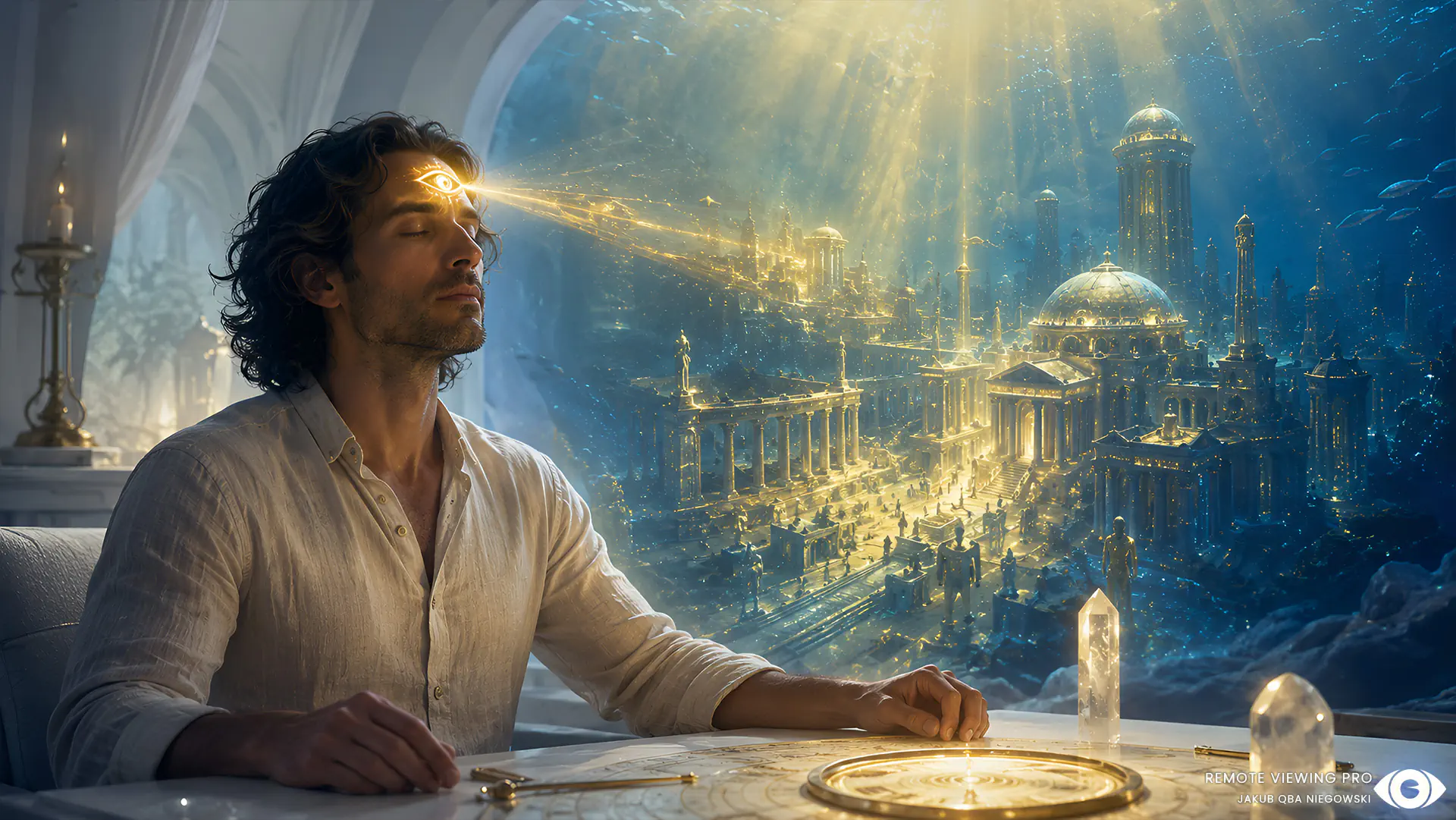
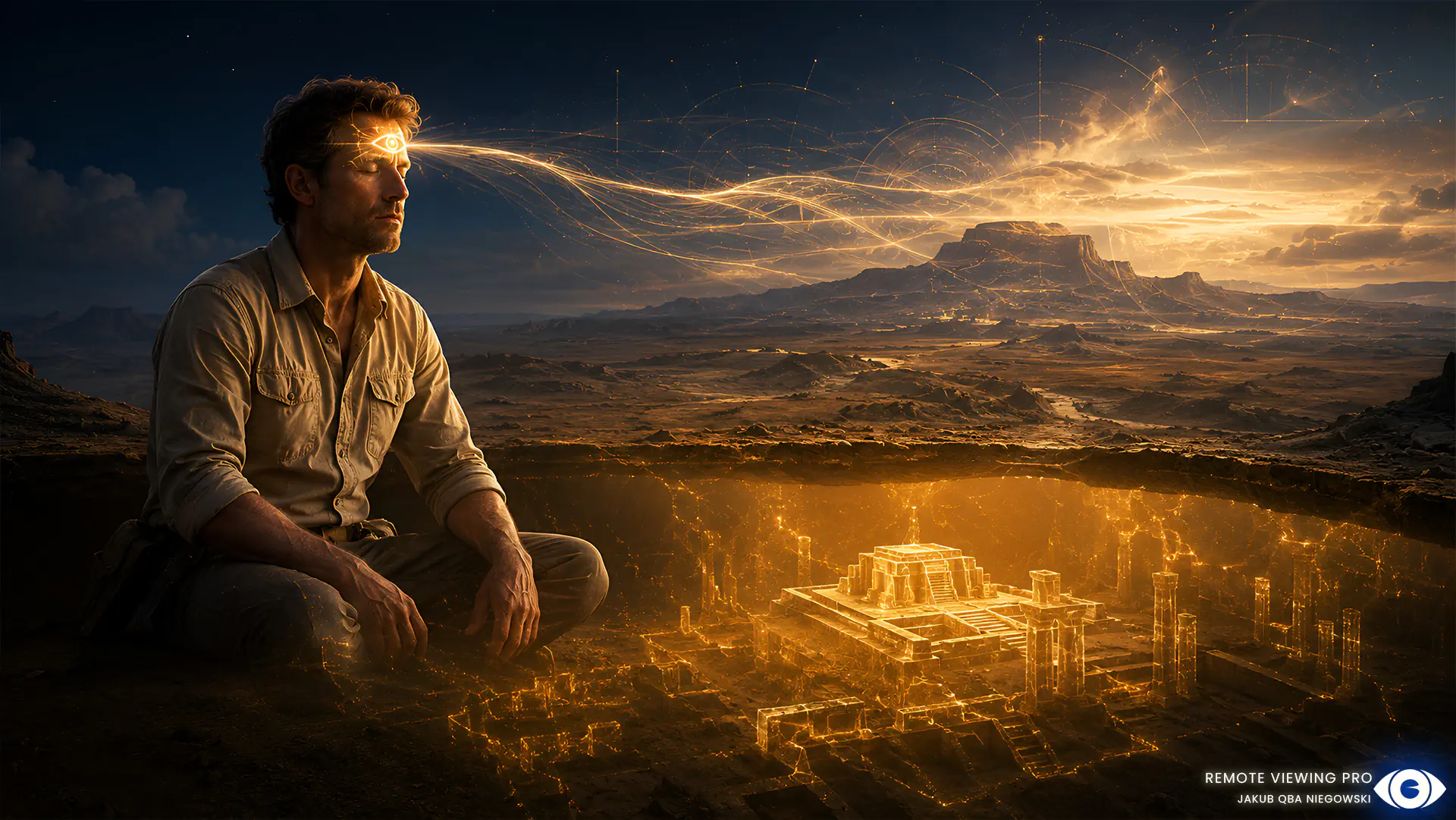
Imagine standing on an empty stretch of ground and describing the buried palace beneath your feet before a single shovel has touched the soil. Then imagine archaeologists digging exactly where you pointed and finding it. This is not a fantasy. It is, in essence, what remote viewing has done in the service of archaeology, and it is one of the most romantic and intellectually thrilling applications of the entire skill.
Archaeology and remote viewing turn out to be unexpectedly natural partners. Both are concerned with reaching across distance and time to recover what is hidden. Let me show you how perception has been used to touch the ancient past, and why this application captivates so many people who fall in love with the field.
Perceiving sites before the spade touches soil
Conventional archaeology faces a brutal practical problem: the earth is vast and excavation is slow, expensive, and destructive. Deciding where to dig is everything, and a wrong guess can waste years and fortunes. This is precisely where remote viewing offers something tantalising – the possibility of surveying a site with the mind first, identifying the most promising spots before committing a single trench.
In this approach, viewers are tasked to perceive what lies beneath a location: structures, artifacts, the layout of a buried settlement, the character of what is hidden underground. Their impressions can then guide where excavation should focus. Used this way, remote viewing becomes a kind of psychic survey instrument, pointing the diggers toward what matters and away from barren ground. It is a genuinely practical idea wrapped in an almost magical one.
The Alexandria Project and other explorations
The most celebrated example comes from the work of the researcher Stephan Schwartz and his Mobius group, who applied remote viewing systematically to archaeology. In their Alexandria Project, viewers were used to help locate ancient sites in and around the Egyptian city, and the results were striking enough to enter the serious literature.
Working with the impressions of remote viewers, the project pointed toward locations associated with some of antiquity’s most evocative sites – structures connected to the era of Cleopatra and Marc Antony, and remains of the legendary Lighthouse of Pharos, one of the Seven Wonders of the ancient world. At Marea, a buried city some distance from Alexandria, excavation reportedly confirmed the viewers’ impressions on many points, in places where earlier electronic sensing had found nothing. Years later, independent archaeological teams working the same areas announced discoveries consistent with what had been described. These are documented projects, not legends, and they remain a powerful demonstration of the application.
Cross-checking impressions with discoveries
What makes archaeological remote viewing so compelling is that it is unusually checkable. Unlike many questions, a buried structure either exists where it was perceived or it does not, and the spade eventually settles the matter. This gives the application a built-in honesty. Impressions are recorded in advance, then tested against what excavation actually reveals.
That cycle of perceive, then dig, then compare is exactly the kind of feedback loop that separates real remote viewing from wishful thinking. When viewers describe a wall, a chamber, or a particular layout, and the earth later yields that very thing, the match is hard to dismiss as coincidence. Of course, not every impression hits, and honest accounts include the misses alongside the successes. But the verifiable nature of the work makes it some of the more persuasive evidence for applied remote viewing, precisely because reality gets the final word.
The thrill of touching history with the mind
Beyond the practical value, there is a profound romance to this application that I find irresistible. To turn your perception toward a vanished world – to sense the outline of a temple buried for two thousand years, to brush against the remains of a civilisation through nothing but attention – is to collapse the distance between past and present in the most intimate way imaginable.
Practitioners who work archaeological targets often describe a deep sense of connection, as though they are reaching through time to touch the people who built these places. It transforms history from something read in books into something almost felt. For the curious mind, few experiences rival the wonder of perceiving the ancient past directly and then watching the earth confirm what you sensed. It is exploration in the truest sense, conducted from a quiet chair.
Why archaeological viewing rewards skill
This application, for all its romance, is demanding and rewards genuine training. Describing buried structures with enough specificity to guide excavation requires the disciplined perception that only practice builds – the ability to capture clean impressions of terrain, layout, and depth without letting the imagination embroider a fantasy of treasure and temples.
The temptation to invent is strong here, because the subject is so evocative. A trained viewer learns to stay with what is genuinely perceived rather than the romantic story the mind wants to tell. They also understand how to frame an archaeological target and how to present impressions usefully to people who will actually dig. This is craftsmanship, not daydreaming, and it is why serious archaeological viewing is the province of experienced practitioners.
An honest note on the science
I should be balanced. Mainstream archaeology has not embraced remote viewing as a standard tool, and skeptics rightly point out that impressions can be vague and that hits are easier to celebrate than misses are to remember. These are fair cautions. The documented successes, however, are real and recorded, and they suggest that perception can contribute genuine, checkable information about hidden sites.
The sensible view is neither breathless belief nor flat dismissal. Remote viewing is not a replacement for proper archaeological method, but as a survey aid – a way to generate promising leads about where to look – it has a track record worth taking seriously. Held to that honest standard, the application is remarkable enough without exaggeration.
Where archaeological viewing fits in the bigger picture
Exploring the buried past is one of the most evocative branches of remote viewing’s many uses. To see the full range of what the skill can do, it is worth reading my overview of what you can do with remote viewing.
And if you have a specific site or historical question you would like explored through trained perception, this is specialised work best handled by an experienced viewer. You can request a session from a trained remote viewer, who can bring the discipline and craftsmanship that archaeological targets demand.
Why ancient mysteries suit remote viewing so well
There is a reason the past exerts such a pull on remote viewers, and it goes beyond romance. Ancient mysteries are often exactly the kind of target where conventional methods have hit a wall – sites lost to time, structures whose purpose is debated, questions that the surviving evidence simply cannot settle. When the ordinary tools run out, perception offers a way to ask the question differently.
This is why so much fascinating remote viewing work gravitates toward the enigmas of history and prehistory. Where scholars argue endlessly over a handful of stones, a trained viewer can at least add a fresh, independent impression to the puzzle. It does not replace careful scholarship, but it can suggest new angles and possibilities that excavation might later test. The deep past, full of unanswered questions, is a natural playground for a skill built to reach what is otherwise unreachable.
This natural fit between perception and the past is also why so many of remote viewing’s most captivating case studies involve ancient sites and historical enigmas. When a mystery has resisted every conventional answer, the chance to approach it through trained perception is simply irresistible, and it has produced some of the field’s most memorable explorations.
Frequently asked questions
Has remote viewing really been used in archaeology?
Yes. The best-known example is Stephan Schwartz’s Mobius group and the Alexandria Project, where viewers helped locate ancient sites in Egypt. Excavation later confirmed many impressions, and the work entered the serious literature.
How does remote viewing help archaeologists?
It can act as a kind of survey, with viewers perceiving buried structures and layouts before excavation, helping decide where to dig. This can focus limited resources on the most promising spots rather than barren ground.
Is archaeological remote viewing scientifically accepted?
Mainstream archaeology has not adopted it as standard, and skeptics note that impressions can be vague. However, documented projects produced real, checkable successes, suggesting it has genuine value as a survey aid rather than a replacement for proper method.
Why is archaeological viewing considered reliable to test?
Because a buried structure either exists where it was perceived or it does not. Impressions are recorded in advance and tested against excavation, creating an honest feedback loop that makes successes hard to dismiss as coincidence.
Jakub Qba Niegowski – Extrasensory Consciousness Development Specialist