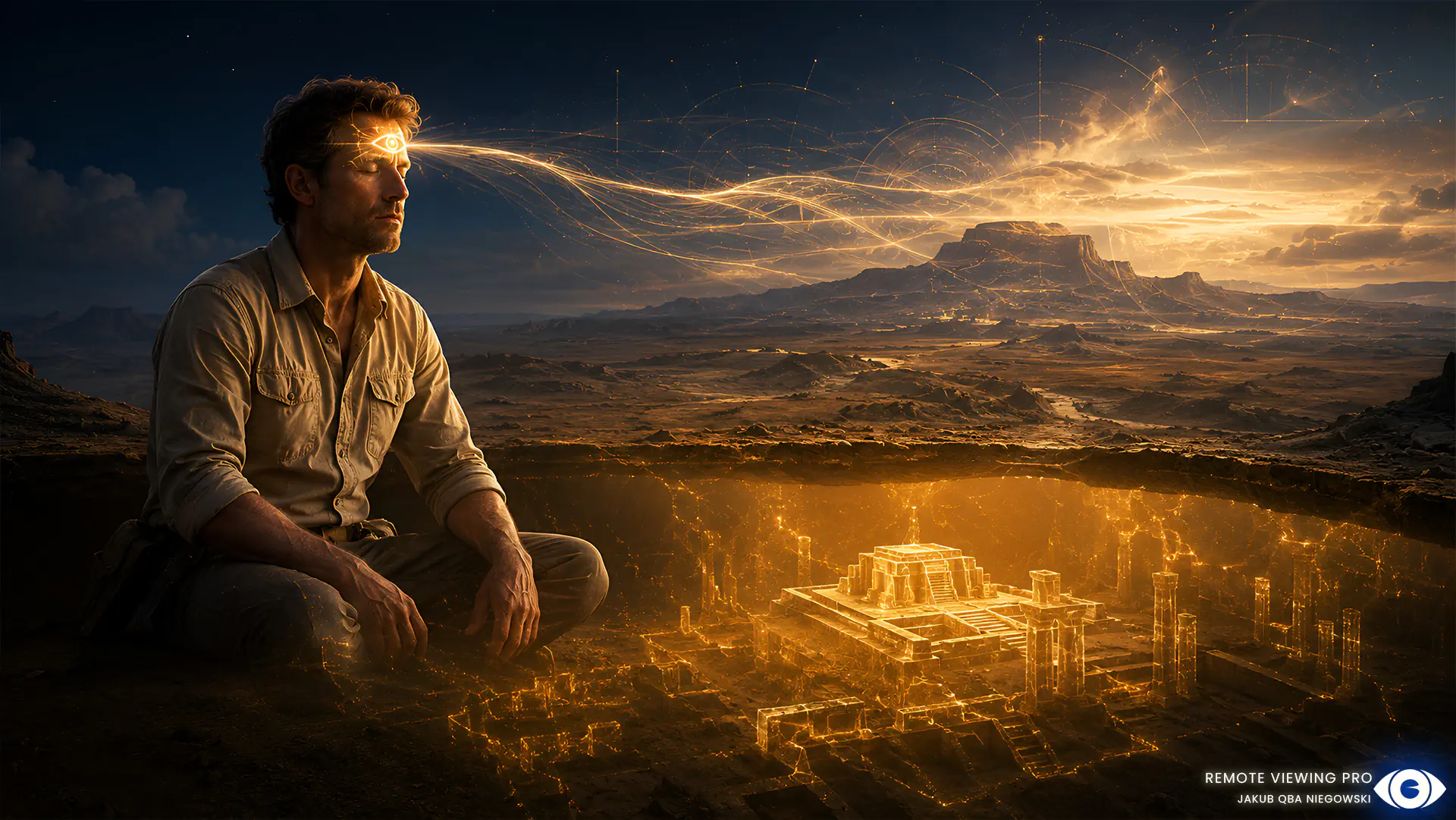

Some applications of remote viewing are abstract or experimental. This one is intensely human. When a person goes missing, when a beloved object vanishes, when a search runs cold, the question becomes painfully simple: where is it? Remote viewing’s search-and-locate ability speaks directly to that question, and it is one of the most practical and emotionally resonant uses of the whole skill.
I want to explore honestly what remote viewing can and cannot offer in the search for lost people and things. There is real substance here, and also a real need for care, because few situations carry higher emotional stakes than a search for someone who is missing.
How viewers describe locations and surroundings
At its heart, remote viewing is exceptionally good at one particular thing: describing places. A trained viewer can often perceive and convey the character of a location – whether it is wooded or open, near water, urban or remote, the lay of the land, nearby structures, the general feel of the surroundings. This is precisely the kind of information a search for something lost most needs.
Rather than producing a precise address, which is rarely how perception works, a viewer typically generates a description of the environment around the target. Hills, a body of water, a particular kind of building, the direction of a road. These impressions can help narrow an impossibly large search area to a much smaller, more promising one. The skill does not usually drop a pin on a map; it paints the landscape around the answer, and that landscape can be enough to point searchers in the right direction.
Search-and-locate impressions explained
Locating something through remote viewing draws on the same core ability as any other session: perceiving a target you cannot reach by ordinary means. What makes search work distinctive is the kind of data that matters most. Directional impressions, relationships between landmarks, the distance and bearing from a known point – these become especially valuable.
A skilled viewer working a search target often builds a composite picture, layering impressions about terrain, nearby features, and the general setting until a coherent location emerges. The work is patient and cumulative rather than a single flash of insight. And as always, it lives or dies on the discipline of separating genuine perception from the mind’s hopeful guessing, which is especially hard when emotions run high and everyone desperately wants a particular answer. That difficulty is exactly why training matters so much in this application.
Stories of striking finds
The history of remote viewing includes genuinely striking cases of location and recovery. During its operational years, the government program tasked viewers with finding downed aircraft, missing equipment, and the whereabouts of people of interest, sometimes with notable success that conventional methods had failed to achieve. Outside official channels, practitioners have described locations of lost objects and missing persons accurately enough to assist real searches.
Honesty requires balance, though. For every striking find, there are sessions that produced vague or mistaken impressions, and the record of psychic assistance in searches is genuinely mixed. I share the successes not to suggest remote viewing is a magic locator, but to show that the ability is real and has, at times, made a tangible difference. The truth sits between the breathless believers and the dismissive skeptics, as it so often does in this field.
Why this application is so demanding
Search work is among the hardest remote viewing there is, for reasons worth understanding. The emotional charge is enormous, and emotion is the enemy of clean perception. When a child is missing or a family is grieving, everyone involved, including the viewer, is flooded with the desperate wish for a particular outcome, and that wish corrupts the signal more powerfully than almost anything else.
The targets can also be genuinely difficult, and the consequences of a confident wrong answer are serious. A misdirected search wastes precious time and can deepen a family’s pain. This is why responsible search viewing demands not just skill but real restraint – the discipline to report only what is genuinely perceived, to flag uncertainty honestly, and never to overstate. It is a domain where humility is not optional but essential.
When to call a trained viewer for help
Given these challenges, when does it make sense to involve remote viewing in a search? Generally, as a complement to conventional efforts rather than a replacement for them. Remote viewing should never substitute for the police, search-and-rescue teams, or proper authorities, who must always remain the primary response. Where trained perception can add value is as an additional source of leads, especially when ordinary methods have stalled and a search needs fresh direction.
It also matters who you involve. This is not work for a curious beginner; it calls for an experienced, disciplined viewer who understands the emotional minefield and the responsibility involved. A trained practitioner knows how to stay grounded, how to keep their own hope from contaminating the data, and how to offer impressions with appropriate caution rather than false certainty. If you are considering remote viewing assistance for a genuine search, seeking out an experienced viewer is essential.
A responsible perspective
I want to be especially careful here, because this application touches real suffering. Remote viewing is not a guaranteed solution to a missing-person case, and presenting it as one would be cruel to families in crisis. What it can honestly offer is an additional perspective, a set of perceived impressions that may help narrow a search, contributed responsibly alongside conventional efforts and never in place of them.
Held to that honest standard, it has genuine value. A description of terrain that focuses a search, a directional impression that opens a new line of inquiry – these are real contributions. The key is to engage this application with both hope and humility, understanding exactly what it is and what it is not.
Where search work fits in the bigger picture
Finding lost people and things is one of the most practical branches of remote viewing’s many uses. To see the full range of what the skill can do, it is worth reading my overview of what you can do with remote viewing.
If you have a genuine need – a search where an experienced viewer’s perspective might help alongside conventional efforts – this is not something to attempt as a novice. You can request a session from a trained remote viewer, where the work is handled with the skill, discipline, and care that this sensitive application demands.
How impressions become a usable search
People often wonder how a handful of perceived impressions could ever guide a real search, so it helps to understand the process. A skilled viewer rarely produces a single answer. Instead, they generate a cluster of descriptive details – terrain, nearby landmarks, the feel of the surroundings, directional senses – that can be cross-referenced against a map of the actual search area.
When several independent impressions converge on the same kind of place, that convergence is what narrows the field. A description of water, a slope, and a particular structure might eliminate vast stretches of unlikely ground and focus attention on a few promising zones. Multiple sessions, or multiple viewers working blind, can strengthen the picture further when their impressions agree. It is patient, cumulative work, more like assembling a composite than receiving a revelation, and that careful method is what gives it any practical value at all.
None of this makes remote viewing a guaranteed answer to a search, and it should never raise false hope. But understood as a way to generate and converge independent leads, handled by experienced viewers alongside conventional efforts, it has a real and sometimes decisive contribution to make. The method is humble, cumulative, and honest, which is exactly what such serious work requires.
Frequently asked questions
Can remote viewing find missing people?
It can sometimes contribute useful impressions about locations and surroundings that help narrow a search. The record is mixed, and it should support rather than replace police and search-and-rescue efforts, but it has at times made a real difference.
How does remote viewing locate lost things?
Viewers typically describe the environment around a target – terrain, nearby landmarks, direction and distance from a known point – rather than producing an exact address. These impressions can narrow a large search area to a smaller, more promising one.
Is remote viewing reliable for searches?
Not perfectly. Search work is among the hardest remote viewing, because emotional stakes corrupt perception and wrong answers carry real costs. It is best used cautiously, by experienced viewers, as one source of leads alongside conventional methods.
Should I use remote viewing instead of the police?
No. Remote viewing should never replace the authorities, who must remain the primary response. It can serve as a complementary source of additional leads, ideally through an experienced, disciplined viewer, especially when conventional efforts have stalled.
Jakub Qba Niegowski – Extrasensory Consciousness Development Specialist